
When was the last time your coaches, front desk team, and managers were all perfectly aligned, really on the same page?
If you can’t remember, you’re not alone. In most gyms, communication gaps are the silent killers of efficiency.
- A client gets the wrong message about their session time.
- A coach forgets to log a progress update.
- Someone assumes someone else followed up on a lead — but no one did.
The result? Confusion, missed opportunities, and frustration that ripple through your staff and members alike.
Clear communication isn’t a “soft skill.” It’s the foundation of a well-run gym. Every smooth handoff, every happy client, and every successful team meeting starts with people sharing the right information at the right time in the right language.
You probably just rolled your eyes. “I’m a coach, not a wordsmith,” right? Or maybe you think communication sounds a little soft, like something HR cares about, not you.
But let’s be clear. Poor communication is the reason your best coach gets frustrated, your front desk misses leads, and your clients sometimes feel like they’re not getting the attention they deserve.
You don’t need to be a poet to fix it. You just need to make sure your team knows what’s happening, what’s expected, and who’s responsible.
Do that, and you’ll improve staff communication overnight. And in no time, you’ll notice smoother operations, happier people, and fewer fires to put out.
Here are some simple, no-fluff ways to make that happen.
1. Get Clear About Who Does What
If you’ve ever said, “I thought someone else handled that,” you’ve already spotted the problem.
Every gym has invisible gaps in duties, like calling back leads and locking the doors. If it’s not written down, it’s just floating around, waiting to fall apart.
Write it down. Assign names. Use a shared Google Doc or a CRM like Naamly to track who’s doing what and when. This is a basic principle of leadership, which is your job as a business owner (unless you hire a full-time manager and let that person really run things).
When your team members know their lanes, they’ll stay in it and actually get things done. That’s one of the fastest ways to improve staff communication and reduce those “Wait, what happened?” moments.

2. Keep Meetings Short and Useful
If your meetings drag on, everyone tunes out. But if you never meet, everyone’s guessing. Find the sweet spot.
Do a five-minute huddle before opening — who’s training whom, what members need extra attention, what’s on the calendar… Keep a weekly 20–30-minute check-in for updates, challenges, and wins. And once a month, sit down to talk about goals and progress.
These don’t have to be fancy. Grab a whiteboard or use your Naamly dashboard to stay on track. Keep it tight, keep it focused, and always end with who’s responsible for what. Boom — you’ve already started to improve staff communication without a single corporate memo.
3. Make Feedback a Two-Way Conversation
You want your team to listen to you, right? Then you’ve got to listen to them.
Trainers, assistants, and front-desk folks see things you don’t. They’re the ones talking to clients every day. When something’s not working, they know before you do.
Ask for their ideas. Don’t make it weird or formal. Just say, “Hey, what’s not working right now?” or “If you could fix one thing this week, what would it be?”
When you treat communication like a two-way street, people start taking ownership. That’s when your culture changes and you finally improve staff communication in a lasting way.
4. Use Tools That Actually Help
You probably use group texts, sticky notes, and random Slack channels, right? Half the messages get lost, and someone inevitably says, “I never saw that.”
It’s chaos.
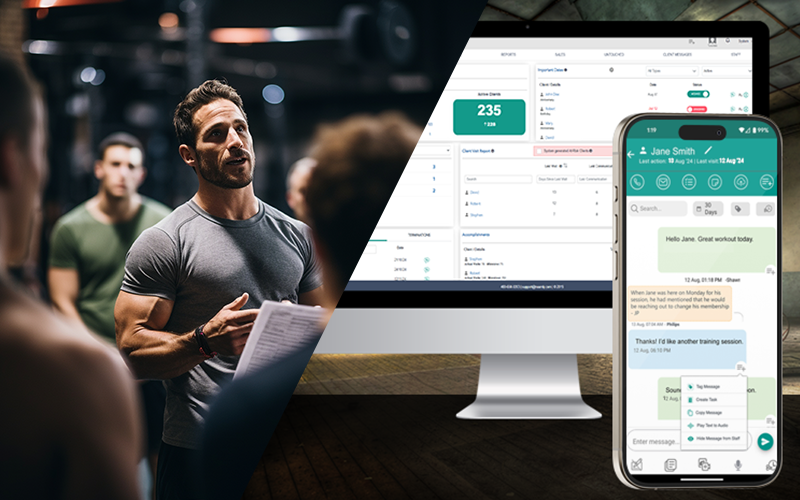
Stop trying to duct-tape your systems together. Use a platform built for gym teams, like Naamly. You can assign tasks, log client notes, and message teammates all in one place. No more wondering who followed up or if that new client ever got added to the app.
When you use tools designed to improve staff communication, you save time, prevent mistakes, and give your team one version of the truth.
5. Set Simple Communication Rules
Make boundaries clear so your group chat and inbox don’t get out of hand. Set a few simple rules, like:
- Text only for urgent issues.
- Log client updates in the CRM, not in a text.
- Acknowledge messages within 24 hours.
- Keep it professional, even when you’re joking around.
These little guardrails keep everyone on the same page. You’ll be amazed how much you improve staff communication just by setting some structure.
6. Lead Like You Mean It
Here’s the truth: communication starts with you. If you keep things close to the vest, your team will, too. If you’re all over the place, they’ll be, too.
Being a leader isn’t just about training sessions and revenue goals. It’s about being clear, consistent, and accountable. Tell your team what’s going on, even when it’s not perfect. Admit mistakes. Follow through.
If that kind of transparency makes you uncomfortable, that’s okay. Leadership isn’t supposed to be comfortable. But if you want a team that runs on trust, you’ve got to model it.
7. Recognize the Good Stuff
You don’t have to throw a pizza party every week, but acknowledgment goes a long way.
When someone does something right, be sure to say so. Out loud. In front of the team.
Recognition builds energy and connection. It makes people want to communicate more because they feel seen. That’s how you improve staff communication organically, not by forcing it.
8. Cut the Bottleneck
If every question, decision, or client message has to run through you, congratulations! You’re the bottleneck.
You hired smart people for a reason. Let them own their space. Give your lead coach the authority to fix small issues. Empower your front desk to solve client questions. Trust them, then verify with systems like Naamly to keep accountability tight.
When people are trusted to act, they stop waiting around and start taking ownership.
9. Debrief and Move On
After a challenging event, take a few minutes to talk about what worked, what didn’t, and how things can be improved. (Don’t blame!)
This will help you build a culture of learning instead of repeating the same mistakes.
The truth about communication? It’s not a one-time fix.
You have to keep practicing and refining it. Keep reminding your team, and the part of you that doesn’t want to be bothered, that this is all really important. When everyone is open and collaborating clearly, everything gets better.
So, yes, communications might not feel like the “tough guy” topic of the day. But if you ignore it, you’ll be the one cleaning up after the mess. Get ahead of it, and your gym will finally run the way you always imagined it could.
The Naamly Connection
Naamly can help. It keeps your team, clients, and systems connected in one spot, everything from task lists to check-ins, from client updates to messaging — all in one spot.
That’s how you improve staff communication in a way that sticks.

Takeaways
- Stop dismissing communication as “soft.” It’s the backbone of leadership.
- Clarity beats chaos. Write things down and assign ownership.
- Meet regularly but keep it short.
- Listen as much as you talk.
- Use real tools that work for real teams.
- Model the behavior you want to see to improve staff communication.
You don’t need a massive overhaul or a TED Talk on leadership. Just a few smart tweaks to how you and your team talk to each other, and you’ll notice the difference immediately.
More staffing tips: Get our free guide “12 Places to Hire Your Next Star Trainer.”