
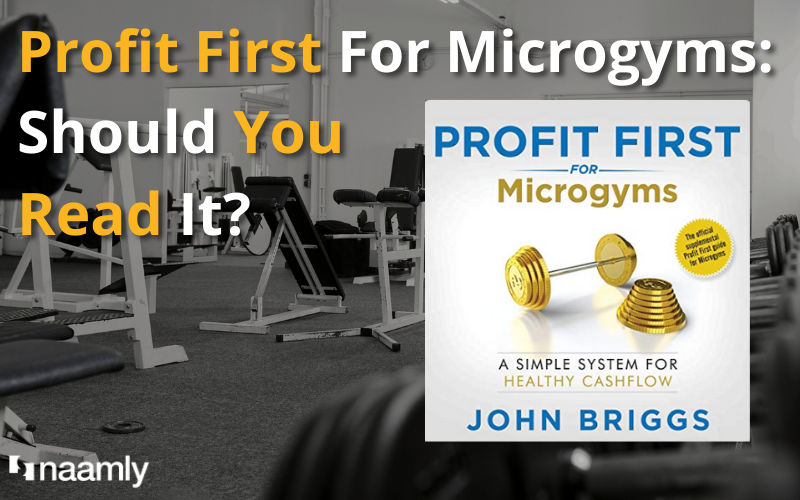
Profit First for Microgyms by John Briggs takes Mike Michalowicz’s Profit First method and rebuilds it for the owner of a small training gym, where payroll and rent eat the month and the owner gets paid last, if at all. It is short, practical and specific to gyms, and the method works because it changes behaviour before it changes the numbers.
Below is the method in brief, the action plan the book lays out, and our verdict on who should read it.
Profit First for Microgyms in two minutes
- Flip the formula. Not sales minus expenses equals profit, but sales minus profit equals expenses: take profit first and run the gym on what is left.
- Open separate bank accounts: profit, owner’s pay, taxes and operating expenses, so money for one purpose cannot quietly fund another.
- Allocate on a schedule. Every deposit is split by fixed percentages, with no exceptions.
- Start small. Begin with a modest profit percentage and raise it a point or two at a time as the gym adjusts.
- Know your numbers: revenue by stream, expenses by category, and a baseline to measure against.
Verdict: read it if you are the owner who checks the bank balance before paying yourself. It is the clearest money system written for gyms this size.

The core concept revolves around a simple but radical idea: put profit first. Instead of the conventional approach of sales – expenses = profit, Michalowicz suggests a reverse formula: sales – profit = expenses. In essence, allocate your profit beforehand, ensuring it’s not an afterthought but a priority.
One gem from the book is the concept of multiple bank accounts. Briggs recommends setting up different accounts for various purposes: profit, owner’s pay, taxes, and operating expenses. This separation prevents the temptation of dipping into profit to cover operational costs, ensuring your hard-earned profit stays intact.
The book emphasizes the importance of small, consistent steps. By starting with a modest percentage for profit allocation and gradually increasing it, you train your business to operate efficiently while still ensuring your financial health.
Moreover, “Profit First for Micro Gyms” emphasizes the power of analyzing data. Track your finances religiously, diving into the numbers to understand where your money goes. By knowing your numbers inside out, you gain invaluable insights into your business’s financial health and areas that require improvement.
So, what’s the action plan for implementing these transformative principles?
Dive Deep into Financial Records:
Take a magnifying glass to your financial records. Look beyond just the surface numbers; dig into the nitty-gritty details. Understand your revenue streams, not just the total income, but where it comes from—membership fees, personal training, merchandise sales, etc. This insight will help you identify your most profitable avenues.
Profit Margins and Expenses Analysis:
Calculate your profit margins meticulously. It’s not just about how much you’re making but how much you’re keeping after all expenses. Analyze expenses categorically—rent, utilities, equipment maintenance, employee salaries, marketing costs—to comprehend where your money is flowing and where it’s leaking.

Baseline Creation:
This snapshot of your financial health becomes the cornerstone of your strategy. It’s the starting point from which you’ll measure progress. Understanding where you stand financially empowers you to make informed decisions moving forward.
Allocate Accounts:
Multiple Bank Accounts Setup:
Consider the practicality of setting up separate bank accounts. Each account serves a specific purpose: one for profit, one for owner’s pay, one for taxes, and another for operational expenses. This segregation ensures that money designated for one purpose isn’t inadvertently used for another.
The Profit Allocation Ritual:
Allocate a fixed percentage of your income to the profit account—no ifs, ands, or buts. This consistent, disciplined approach ensures that your profit isn’t an afterthought but a predetermined priority.
Track and Adjust:
Rigorous Financial Monitoring:
Keep a keen eye on your finances. Regularly review your accounts, expenses, and revenue streams. Use accounting software or tools to streamline this process. Identify patterns, spot areas of overspending, and note underutilized resources.
Tweaking Allocations:
This vigilance allows you to make informed adjustments. If you notice certain expenses consistently over budget, recalibrate allocations. Perhaps marketing is proving more fruitful than expected, warranting a slight increase in that budget. Flexibility within your allocations is key.

Start Small, Grow Big:
Conservative Profit Allocation:
Don’t aim for the stars right away. Begin with a modest percentage for profit allocation. This cautious approach ensures that your business operations aren’t compromised while gradually building up your profit reserves.
Gradual Increment:
As your gym stabilizes and grows, incrementally increase the profit allocation percentage. Small steps forward are more sustainable and allow your business to adapt without feeling the strain of sudden financial changes.
Education and Support:
Continuous Learning:
Never stop learning. Stay updated with industry trends, financial strategies, and best practices. Attend workshops, read articles, and, of course, invest time in educational materials like “Profit First for Micro Gyms.” Knowledge is a powerful tool in financial management.

Seeking Guidance:
Don’t hesitate to seek advice from financial advisors or tap into community networks. Collaborate with other gym owners, share insights, and learn from each other’s experiences. Their collective wisdom can provide invaluable perspectives and solutions.
By delving deeper into these aspects, you’re not just implementing financial strategies; you’re nurturing a financial mindset. This proactive approach will sculpt a resilient and financially robust micro gym, setting the stage for sustainable growth and success.
Diving into “Profit First for Micro Gyms” isn’t just a suggestion; it’s a must-do! While this review highlights some of the book’s key takeaways, there’s truly no substitute for immersing yourself in Briggs’s insights and strategies.
The book is a treasure trove of practical advice, real-life examples, and actionable steps specifically crafted for micro gyms. It’s a roadmap that not only outlines the principles but also guides you through their implementation. Briggs’s writing style makes financial concepts accessible and relatable, ensuring that even those unfamiliar with accounting terms can grasp and apply the strategies effectively.

If you’re looking for more valuable resources like “”Profit First for Micro Gyms”, we’d recommend you check out our Fitness Boost Bundle, completely free! Our bundle promises invaluable returns—a blueprint for a more profitable, sustainable business.

About the author
Sumit SethFounder, NaamlySumit founded Naamly to give training gyms one system for billing, scheduling, texting and staff accountability, and still runs every product demo himself. He writes about retention, billing and the daily rhythm that lets owners step away from the front desk.
Free download
Want more ways to grow your gym?
Get the Fitness Business Boost Bundle: a checklist, a cheatsheet and a guide from the team behind Naamly.