Is Your Gym Too Dependent on One Person ?
 Sumit SethFounder, Naamly
8 min read
Sumit SethFounder, Naamly
8 min read
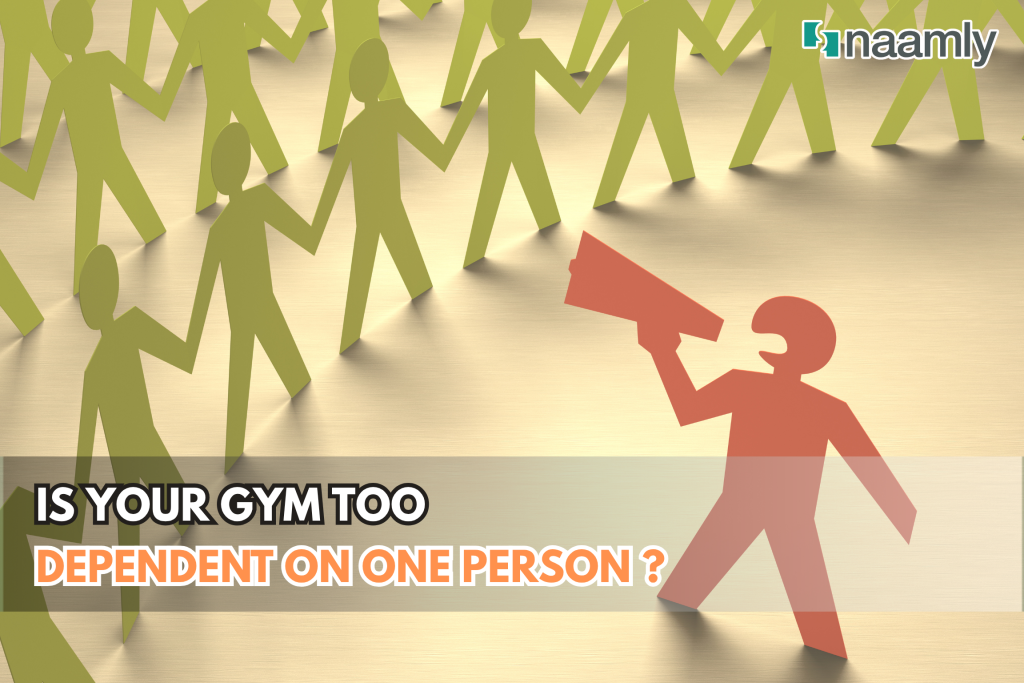
Lots of gyms have someone who seems to know everything.
That might be natural and comfortable, but it’s not the best route to efficient gym business operations.
This person knows how to fix a billing problem, where the waiver forms are stored, which members need extra attention, how to handle a frozen membership, and what to do when the scheduling software acts up.
When a prospect says, “I talked to somebody last week,” they somehow know who it was and what they talked about.
Maybe that person is your general manager. Maybe it’s an employee who has been with you for years.
Or maybe it’s you.
Having someone who knows the business inside and out can feel like a tremendous asset. And it is — until that person takes a vacation, gets sick, leaves for another job, or simply becomes overwhelmed.
Then you discover how much of your gym business operations existed only inside one person’s head.
That’s a vulnerability many gym owners don’t recognize until it causes a problem.
‘Ask Sarah’ Is Not a Business System
Small businesses naturally develop around the people running them. In the early days of a gym, that’s often the owner.
You answer the phone. You meet prospects. You solve membership problems. You order supplies. You know which trainer works best with which member. You remember that Bill is traveling for three weeks, and that Maria wants to move her Tuesday session.
As the business grows, some of that responsibility shifts to a manager or another trusted employee.
But the knowledge doesn’t always shift with it.
Instead, the business develops an informal operating system:
Ask Sarah.
· Sarah knows how to do it.
· Sarah has the password.
· Sarah knows what happened last time.
That can work surprisingly well — right up until Sarah isn’t there.
A healthy approach to gym business operations ensures the business can function without requiring any one person to be present every day.
The Owner Can Be the Biggest Bottleneck
Sometimes the indispensable person is the owner.
You built the business. You’ve probably done almost every job in it at some point, and you know things about your gym that nobody else does.
But if employees constantly need your approval, memory or intervention to keep everyday tasks moving, you don’t just have a busy schedule. You have an operational problem.
Look at how often your team comes to you with questions.
· How do we handle this?
· Where can I find that?
· Can you talk to this member?
Some questions genuinely require the owner’s judgment. Many shouldn’t.
If you’re answering the same questions repeatedly, that’s a clue that the information needs to live somewhere besides your head.
The goal is to make sure your gym doesn’t require your constant involvement in routine matters.
That gives employees more confidence and gives you more time for the work that actually requires an owner.

Watch Out for Tribal Knowledge
Businesses accumulate what’s often called tribal knowledge, or information everyone seems to know but nobody has documented.
That creates gaps in gym business operations because information gets passed along casually from one employee to another.
Each person might explain the process a little differently. Steps get forgotten. New employees learn by watching whoever happens to train them.
Eventually, “the way we do things” becomes five slightly different ways of doing things.
The problem becomes especially obvious when an experienced employee leaves. They don’t just take their personality and skills with them. They can take years of institutional knowledge, too, throwing a kink in your gym business operations.
Start With the Things You Do Over and Over
Think about the tasks your team performs repeatedly. For example:
- Responding to a new lead
- Scheduling an initial consultation
- Following up after a missed appointment
- Freezing or canceling a membership
- Contacting a member who has stopped coming
- Handling billing questions
- Opening and closing the gym
- Onboarding a new member
- Onboarding a new employee
- Responding to a complaint
Now ask a simple question: If the person who normally does this were unavailable tomorrow, could someone else take over?
If the answer is no, you’ve identified a process worth documenting for better gym business operations.
This is where standard operating procedures, or SOPs, become useful. The term can sound painfully corporate, but an SOP doesn’t have to be a 12-page document with a flowchart.
It can be a checklist.
Or a short document with five steps.
Or even be a two-minute screen recording showing someone exactly how to complete a task.
For efficient gym business operations, the best system is the one your employees will actually use.
Make Information Easy to Find
Documenting a process doesn’t help much if nobody knows where the document is.
Does your staff know one document is in Google Drive… and another is attached to an old email… and a third is scribbled on a Post-it note somewhere?
Building stronger gym business operations means creating a shared source of information.
Your team should know where to find current procedures, templates, policies and other information they need to do their jobs.
That same principle applies to member and prospect communication.
Important information shouldn’t disappear into one employee’s personal notes or memory. If someone has contacted a prospect three times, your team should be able to see that. If a member has raised a concern, the appropriate people should know about it. If follow-up is needed, it should be clear who is responsible.
This is one area where a system like Naamly can help. Keeping conversations, follow-up and member information visible to the team reduces the chances that an important interaction depends on one person remembering what happened.
It also makes handoffs much easier when schedules change, or someone is away.
Cross-Train Before You Need To
There’s another simple test for your systems: Who is the backup?
If only one person knows how to perform an essential task, you haven’t really created a system yet.
· Someone besides the manager should know how to handle common membership issues.
· More than one person should understand your lead follow-up process.
· Someone else should know what needs to happen if the person who normally opens the gym can’t get there.
And don’t wait until someone announces a two-week vacation to teach the backup.
Give employees occasional opportunities to perform tasks they might someday need to cover. That’s how you find out whether your written process actually makes sense.
Systems Should Support People
None of this means turning your gym into a rigid operation where employees follow scripts, and nobody thinks for themselves.
The people are still the business.
Members form relationships with coaches and staff. Great employees notice things that software won’t. Experienced managers develop judgment that can’t be reduced to a checklist.
Good systems support those strengths.
They take routine questions and preventable confusion off people’s plates so employees can spend more time on work that requires human attention.
That can be particularly valuable with member communication. A shared system can help your team know who needs follow-up and what communication has already taken place. The employee can then focus on the conversation itself instead of trying to reconstruct the history.
The strongest gym business operations combine clear systems with people who know when and how to use their own judgment.

Try the Two-Week Test
Want to know how dependent your gym is on you or another key person?
Imagine that person will be gone for two weeks starting tomorrow.
No phone calls. No texts. No “quick question.”
What stops working?
Make a list.
Maybe nobody knows how to resolve certain billing problems. Maybe lead follow-up becomes inconsistent. Maybe nobody knows the password to an important account.
Each item on that list is telling you something.
Pick the biggest vulnerability and document it. Then tackle another.
Over time, you’re creating a business where knowledge belongs to the organization rather than to one individual.
That makes life easier when somebody takes a vacation or calls in sick. It makes hiring and training easier. It makes transitions less disruptive when employees leave.
And it makes growth easier because you’re no longer relying on one person to hold everything together.
Great employees will always be valuable. Great owners will, too.
But the ultimate goal of better gym business operations is to build a gym that works because your people have the information, tools and systems they need — not because one indispensable person somehow remembers everything.
Accelerate your success with Naamly’s free guide 12 Places To Hire Your Next Star Trainer.
About the author
Sumit SethFounder, NaamlySumit founded Naamly to give training gyms one system for billing, scheduling, texting and staff accountability, and still runs every product demo himself. He writes about retention, billing and the daily rhythm that lets owners step away from the front desk.
Free download
Want more ways to grow your gym?
Get the Fitness Business Boost Bundle: a checklist, a cheatsheet and a guide from the team behind Naamly.